The fascinating tech approaches to the 2026 regulations revealed by Ferrari and Alpine’s new machines
Following Ferrari and Alpine's car reveals, F1 technical expert Mark Hughes takes a closer look at their respective machines – and the 2026 regulation trends that are already emerging.

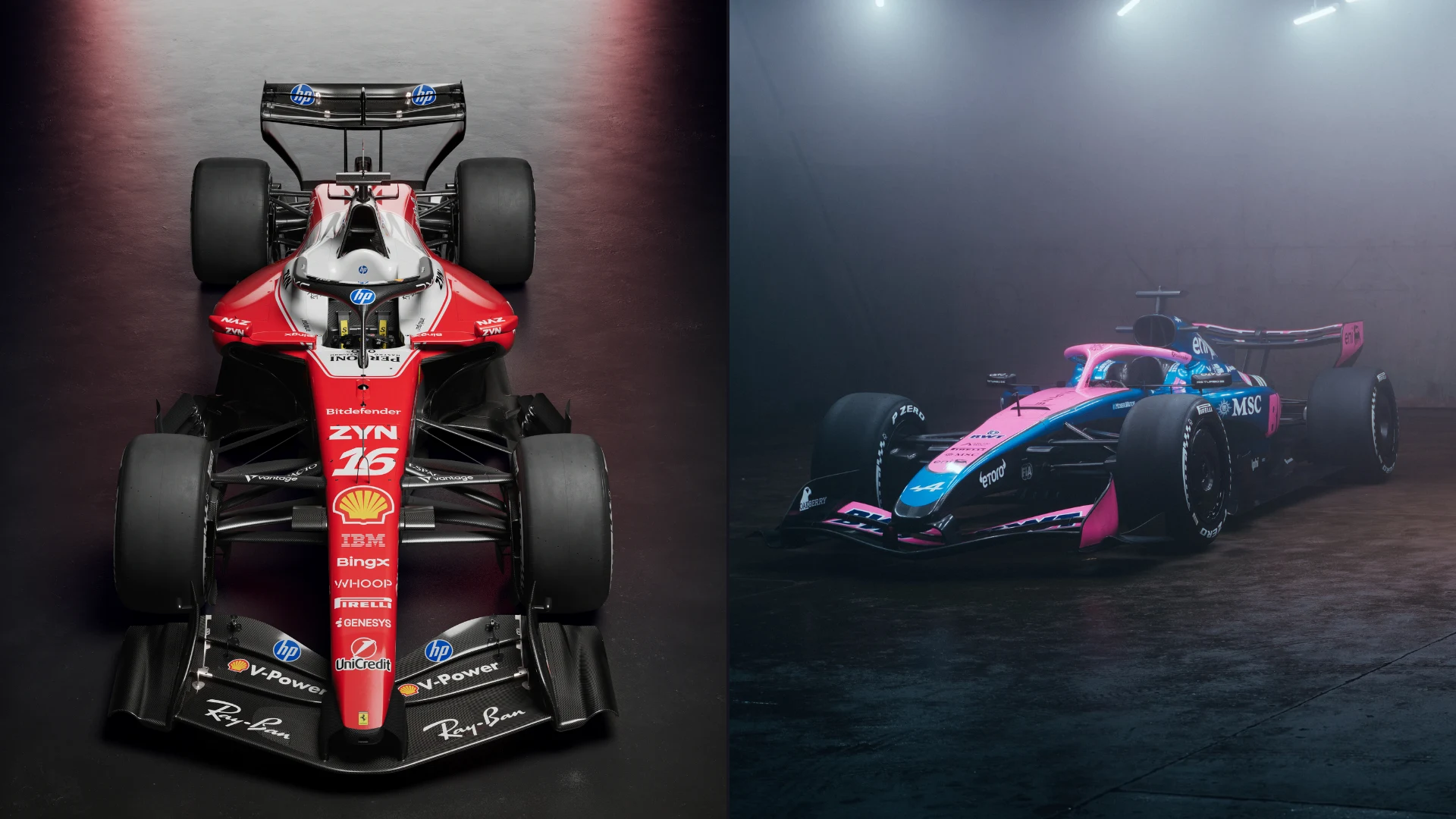
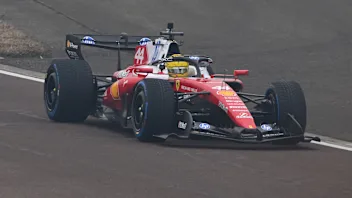
The details of the Ferrari SF-26 have confirmed some of the emergent design trends of cars under the new regulations. But there are key differences with the Mercedes W17 launched the previous day and further differences from the Alpine A526, which made its shakedown run at Silverstone as the Ferrari drivers were lapping Fiorano.
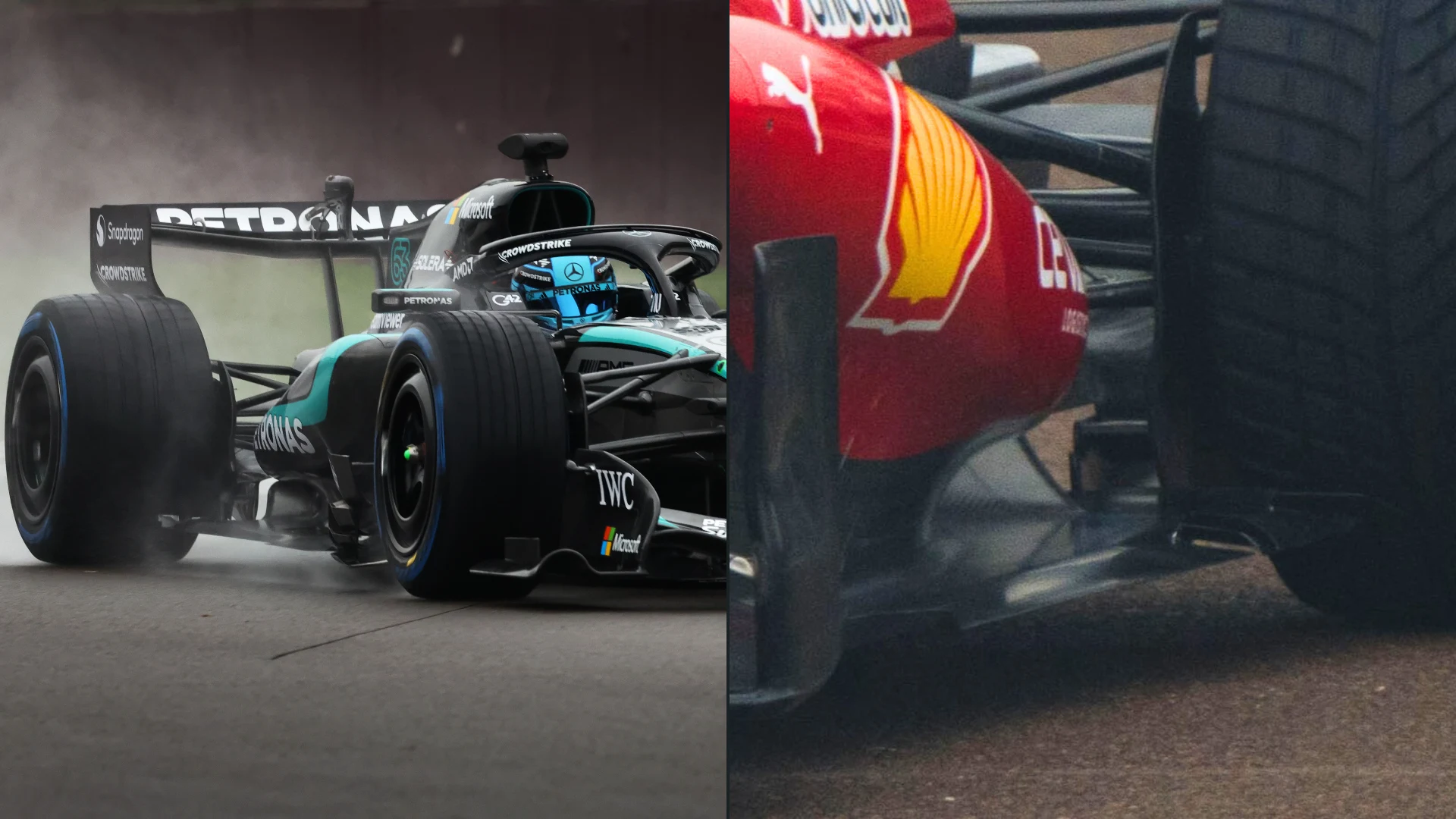
But one small detail shared by the Ferrari and Mercedes has drawn much attention. They both feature a significant hole in the lower bodywork around the diffuser, allowing some airflow from the external surfaces to switch to the diffuser’s inner wall.
This is a variation of a theme seen in some pre-2022 cars, whereby a ‘mouse hole’ slot was used to energise airflow in the diffuser. The differing dimensional regulations mean the gap seen on the Mercedes and Ferrari are bigger than the old mouse holes but the principle is the same.
Such devices are used when the aerodynamicists need to further improve the diffuser’s flow. The faster the flow, the greater the downforce. In the 2022-25 ground effect cars, the diffuser was most effective when sealed off from the external airflow. The ground effect accelerated the air so well that allowing in external flow would only have slowed it.
That’s no longer the case – and now the airflow being accelerated by the diffuser ramp needs to be prevented from detaching, just as with a steep flap angle on a wing element. These holes are the diffuser equivalent of a wing’s slot gap.
A key reason the teams might be seeing a less-than-satisfactory flow through the underfloor into the diffuser could be the newly-regulated in-washing ‘floor boards’ just ahead of the sidepods. In appearance they are similar to the barge boards seen in this area before they were banned from ’22, but their intended function is actually the opposite.
Whereas the old barge boards could be aligned any way the teams chose and were used to take the wake from the front tyres and out-wash it away from the front of the floor, these ones are regulated to be aligned inwards, with the intention of narrowing the aerodynamic wake of the car, so as to aid overtaking. Introducing air which has already been disturbed by the wheels and suspension into the floor will slow the underfloor airflow, reducing the downforce.
Teams are doing their best to minimise how much of that airflow is in-washed by the boards. Although the main outline of the board has to point inward, the elements within it can be aligned in ways that send at least some of the air outwards.
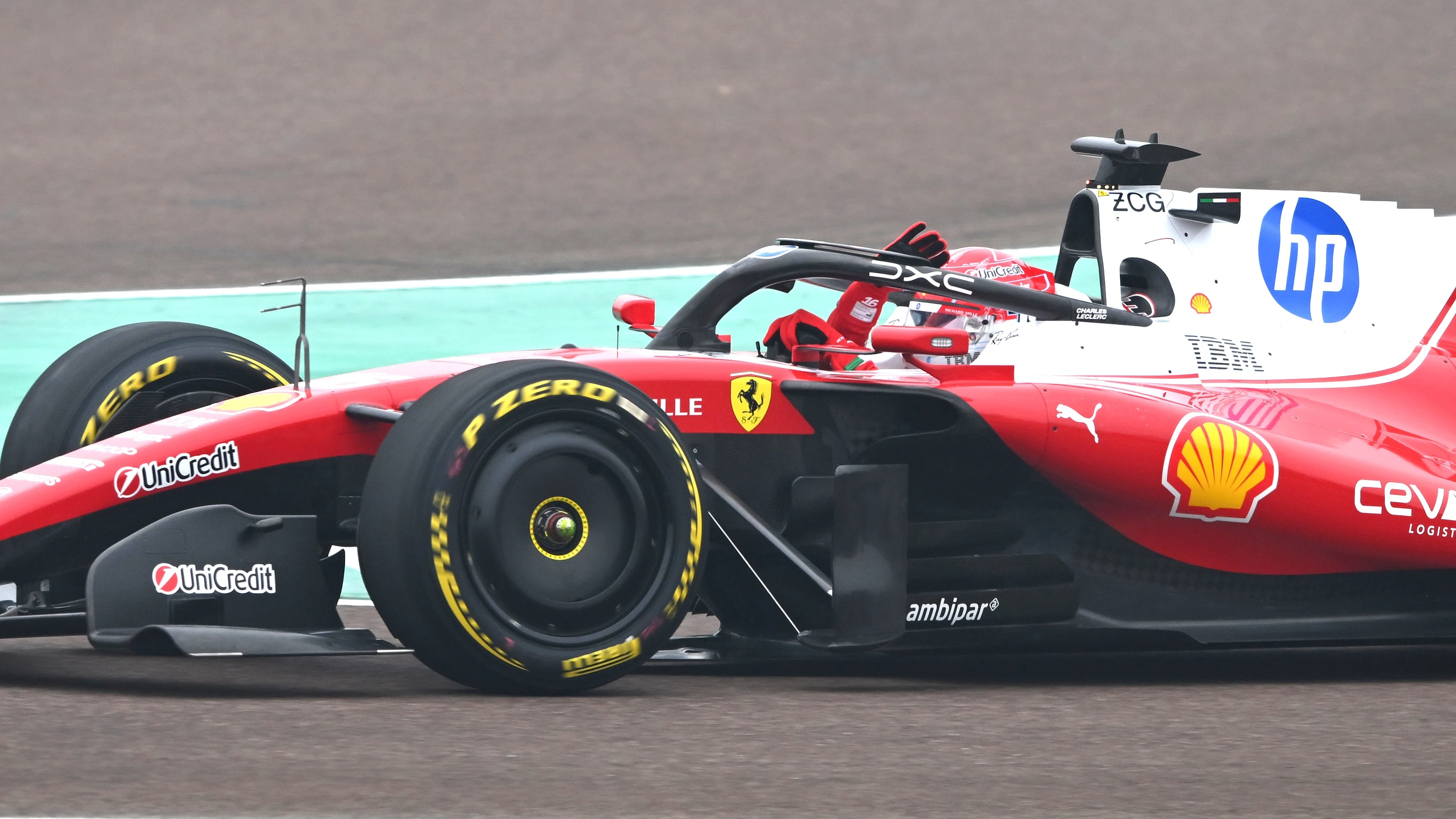
Ferrari have used a leading edge tower to comply with the inward inclination regulation and used three lateral vanes (the maximum permitted) to minimise the in-wash. Mercedes have used bigger elements but without the tower. It’s significant that Ferrari have mounted this whole structure very rigidly, with supporting struts to ensure there is no excessive movement to interrupt the flow patterns at the loads seen at high speeds.
The Ferrari’s nose appears significantly lower than that of the Mercedes and its underside has much less of an undercut. This suggests the Ferrari will not be able to feed their floor with as great a volume of air. The height of the nose under these regulations is partly defined by where the cockpit and front axle line are situated relative to each other. The closer they are, the greater the nose height can be – and it does appear as if Mercedes have brought their cockpit slightly further forwards than Ferrari and Red Bull.
Ferrari have newly-adopted pushrod actuation for their front and rear suspensions, bringing them into line with the new Red Bull, Racing Bulls and Mercedes. Last year’s Ferrari was all pullrod. But Alpine have chosen a different path, retaining pullrod for the front, a choice made also by Cadillac.
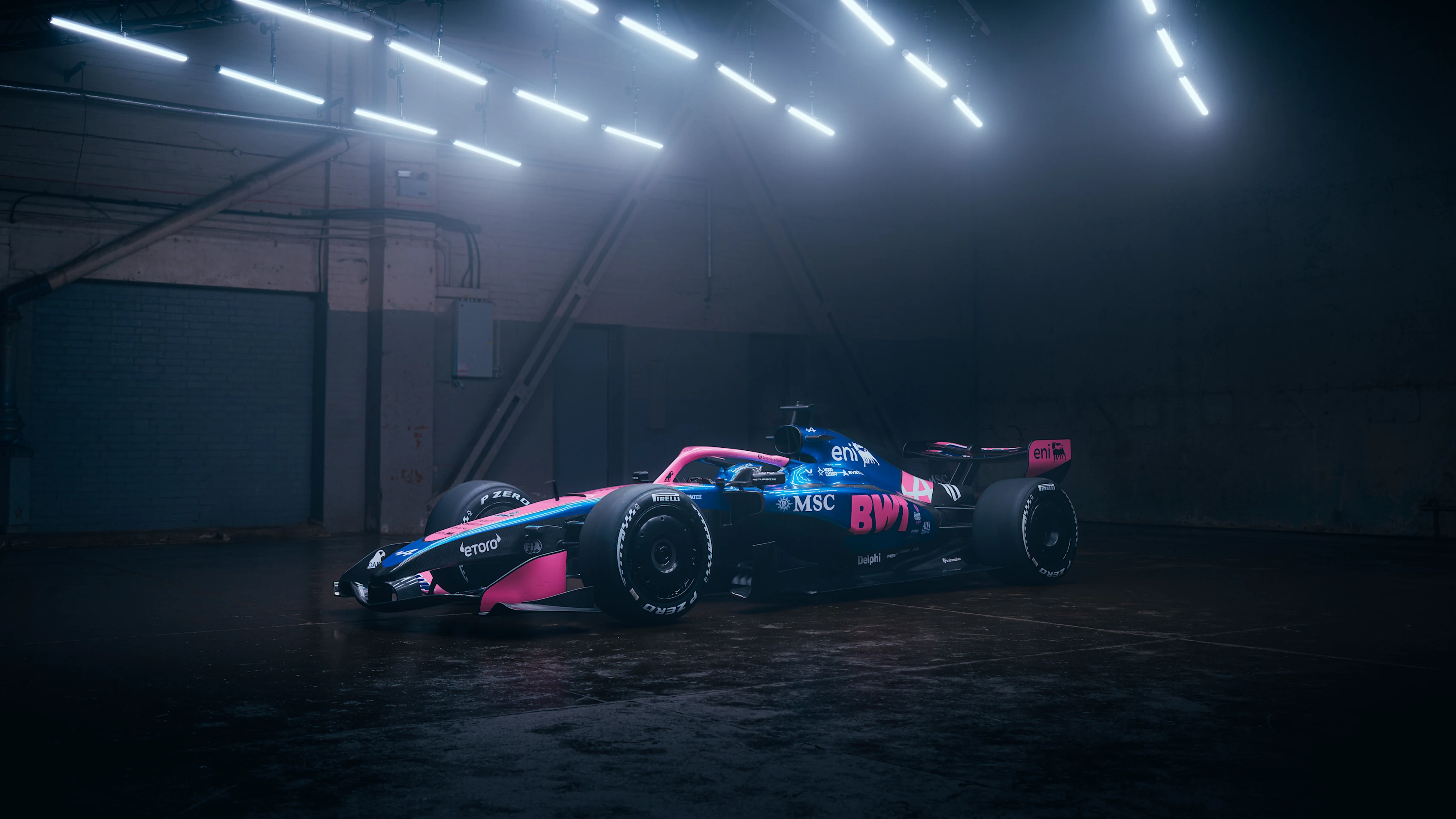
Whether the rockers are down low (as on a pullrod) or up high (as on a pushrod) makes little difference to the kinematics of the suspension but will determine the shaping of the aero surfaces around it. Pushrod front is probably finding more favour this year partly because of trying to minimise the disruption of the air low down. With the rockers moved up, the air will be cleaner in this area where it’s about to be fed to the new floor boards and then the floor.
But, as ever, it all depends on how the car has been designed around it. Alpine clearly feel there are still advantages to the front pullrod. The remaining details of the A526 are not clear from the shakedown footage while the renders shown at the launch are not accurate.
Ferrari have switched from pullrod to pushrod at the rear, bringing them more into line with the others. Without the beam wing (deleted by the regulations), having the rockers down low (as with the pullrod) no longer offers an aero advantage.
Ferrari are emphasising that the shakedown/Barcelona test car will not be the same as the one due to appear for Bahrain testing. But in terms of fundamentals such as cockpit and axle positioning, everything is now set.
Watching how everything evolves from here at the dawn of the new regulations should be very interesting.
Next Up
.webp)