Neck workouts, cardio sessions and mental exercises – How to train like an F1 driver
F1 drivers are among the fittest athletes in the world, requiring exceptional strength, endurance, and mental resilience to perform at mind blowing speeds.

January is synonymous with fresh starts, but even more so getting back into routine after a well-earned rest period, and F1 drivers are no different.
The drivers have been making the most of the winter break so far, whether it’s Alex Albon unwinding on the water, George Russell hitting the slopes with family, or Lewis Hamilton soaking up the energy of New York, but all attention now turns towards the 2026 season.
For most of us, getting into shape means a renewed focus on eating well and fitting in regular exercise. For F1 drivers, however, the process is far more complex. Peak physical conditioning is just the starting point. Drivers must prepare their bodies to withstand intense g-forces, maintain a finely balanced racing weight, and keep their reactions lightning fast. Not to forget they must manage all this all while keeping mental wellbeing, recovery and sleep firmly in check.
It’s a relentless routine for each driver, and one that underlines just how demanding life at the pinnacle of motorsport really is. Let’s take a look at some of the ways F1 drivers train for the season, and whether we can take any inspiration for our own fitness goals.
Why do drivers train as hard as they do
Whereas most elite athletes train to improve their performance, F1 drivers also train to cope with some of the most extreme physical forces in sport. Under heavy braking, drivers can apply up to around 160kg of force to the pedal while experiencing up to 6g on their body – meaning they are subjected to forces around six times their body weight. Without specific training and conditioning, the strain placed on their neck, core, and upper body would quickly become unmanageable (at best!) over the course of an arduous race.
Through high-speed corners, drivers are regularly exposed to sustained forces of around 4-5g, with peaks approaching a whopping 6g at certain circuits. At Mugello in 2020, for example, Lewis Hamilton recorded a peak of 5.6g through Turn 7, which is even higher than the forces astronauts experience during rocket launches! Managing these pressures places a significant demand on the body and requires careful conditioning to be able to handle.
However, drivers need to both prepare for racing conditions and extreme incidents – however rare they may be. Accidents such as Robert Kubica’s crash at the 2007 Canadian Grand Prix, which registered forces of up to 75g, and Romain Grosjean’s Bahrain crash in 2020, measured at 67g, highlight why physical conditioning combined with improved safety systems and medical protocols remains a central part of racing.
Day 1: Assessment day
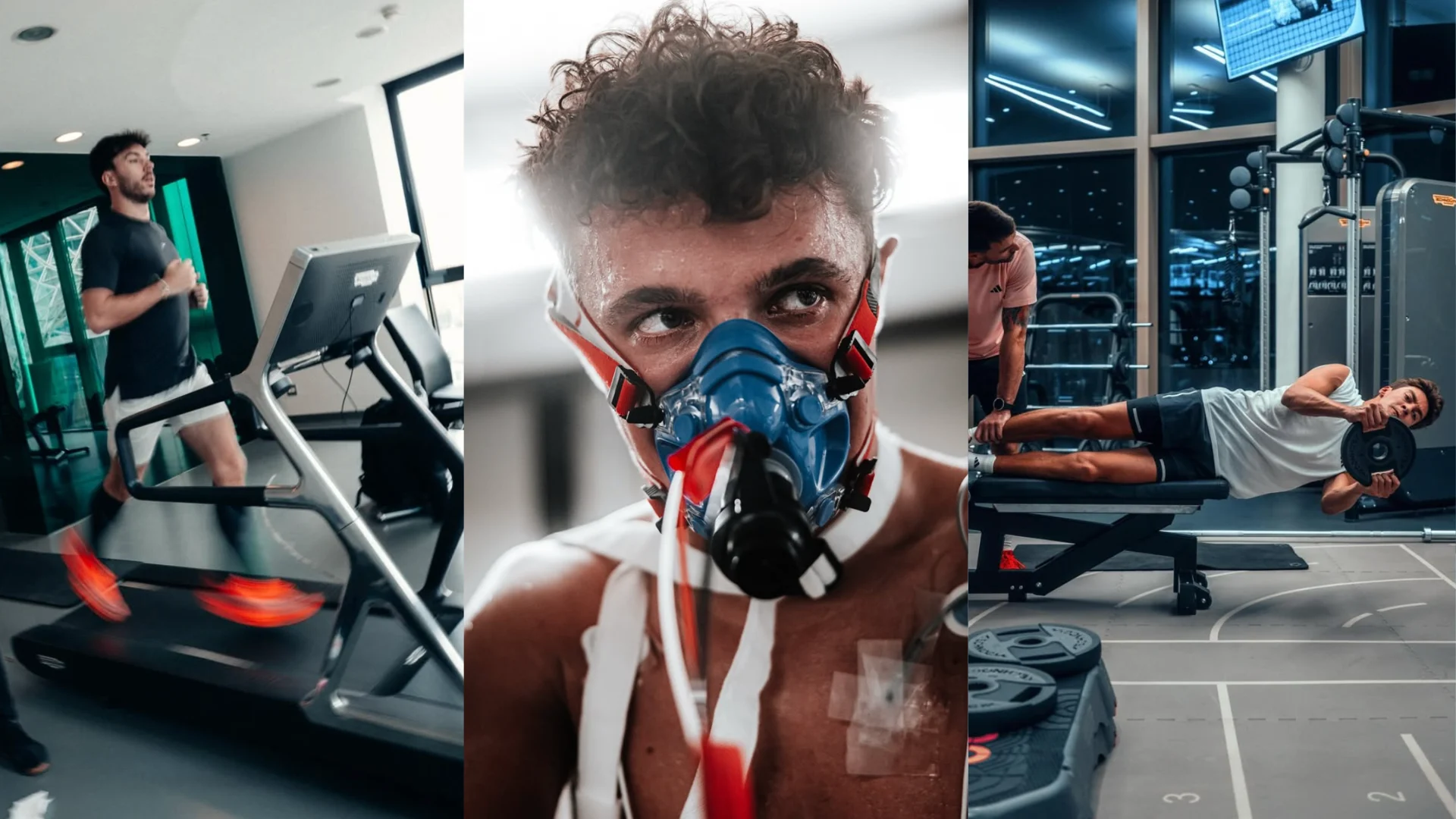
After the long winter break, the first day back at work is assessment day. Winding down over winter is crucial to keep the drivers from burning out during the season, but the first day back can be a gruelling one – with Lando Norris calling it "probably the worst day of the year" and "a gruesome day of training."
His trainer, John Malvern, puts him through a myriad of tests to identify strengths and weaknesses – addressing anything that could cost Norris’ lap time.
The importance of neck training
There is one part of the body that F1 drivers need to train more than any other sport – the neck. Strengthening the neck is so critical that they work it out almost every day, with Malvern saying Norris does neck training at least five times a week.
Why is it so important? F1 drivers hit speeds exceeding 180mph, and during high-speed corners and braking, the g-forces directly push onto their necks, putting them under immense strain. Without training, drivers’ heads would bounce around the cockpit, unable to withstand the strain put on those muscles. Not only must drivers cope with this pressure, but they must get comfortable with it – as they need to remain focussed on driving and having information fed to them through the radio.
Antti Kontsas, former coach to Sebastian Vettel, gives more insight into he importance of a rock-steady neck for the grid. He said: “The real reason why the neck is so important is that you need to see where you're going. It's all about precision. We're talking about hundreds and tenths of a second, and if you don't see exactly where you're going and you cannot navigate well through the track, there's no chance for you to gain that extra hundredth or tenth.”
Through training, F1 drivers can lift up to a staggering 40kg using only their neck muscles achieving this through a variety of innovative if not slightly bizarre exercises. Using resistance bands around your head can imitate g-forces, while drivers also use weighted helmets and specialised neck devices to simulate high-speed corners. Although most of us won’t experience the g-forces that drivers do, training your neck is something you could try at home or in the gym – why not try some neck curls and extensions with small weights or resistance bands?
The cardio to end all cardio
Maintaining an active heart rate is another important part of F1 drivers' training. During a race, their heart rate can exceed 170bpm for a sustained period, so keeping their heart healthy and oxygen flowing is vitally important.
In a scene in F1 The Movie, APXGP driver Joshua Pearce is shown running on a treadmill hooked up to breathing equipment. This is the VO2 max test – one of the ways to monitor drivers' heart and lung capacity, and to measure oxygen delivery to the muscles during training. Essentially, how big your ‘energy tank’ is.
But before they jump on the treadmill for the VO2 max test, drivers often perform an even more demanding test: a three-minute all-out run. Not three minutes of fast jogging, but three minutes of sprinting, with the goal being to cover over 900 meters. Anything further is considered ‘outstanding,’ but it’s no easy feat, as Norris claimed this exercise was as difficult as they come.
The drivers keep up with their cardio year-round, so why not have a go at some of their favourite activities? Carlos Sainz and Valtteri Bottas enjoy scenic cycling to stay fit, Kimi Antonelli is frequently in the pool practicing some strokes, and Charles Leclerc visits the mountains for some cross-country skiing at high altitude.
Handling the heat
The global nature of F1 means that drivers must be prepared for all conditions, especially extreme heat. Cockpit temperatures can exceed 60C – any training done to prepare for this could help performance while alleviating some health risks.
Hamilton and Russell have both mentioned the extreme weight loss experienced at races like Singapore, which can sometimes be up to 4kg of water. Losing this much water from your body in less than four hours is highly abnormal and must be taken seriously, so hydration makes up a key part of training regimes.
The body has to withstand an immense amount of heat, so part of Norris’ assessment day involves testing his body’s response to heat stress. To test his exertion in extreme temperatures, Norris rides a stationary bike, while hooked up to a monitoring apparatus, in a temperature-controlled room to simulate a hot race weekend.
Working out in heat can be useful if done correctly – why not try some warm weather cardio training in summer, some hot yoga classes, or some gentle sauna exercises to work up a sweat?
Noteworthy nutrition
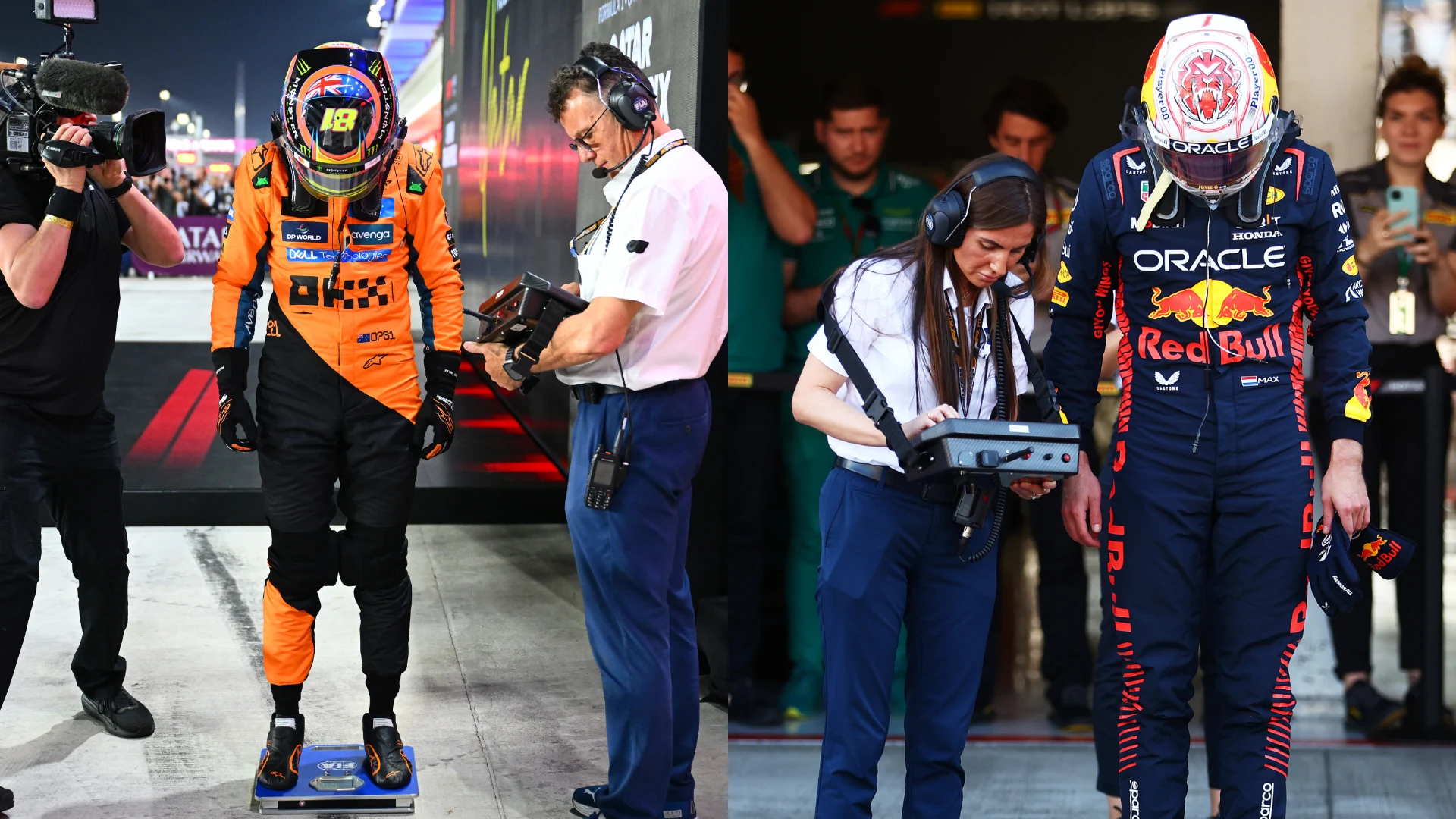
Getting drivers into shape isn't all about logging hours in the gym and laps on the track – good nutrition is vital for high performance athletes. In 2019 the FIA introduced an 80kg threshold for driver weight, with those weighing less having seat ballast to make up difference. As a result, drivers are able to sustain healthy muscle composition with fewer limitations on their nutritional intake. However, they must still carefully balance caloric intake to meet the demands of their intense training and racing, while maintaining an optimal body weight – and as close to the 80kg as possible.
Speaking to The Paddock Journal, Russell’s trainer Aleix Casanovas mentioned how Russell's nutrition is guided by blood tests taken throughout the year, tailored supplements, and constant monitoring of hydration. F1 is about fine margins, so getting the right nutrition is a vital part of preparation all year long.
Norris explained on his YouTube channel how his nutritionist monitors his vitamin and mineral intake to ensure his diet is balanced and working well for him. While most of us won’t have a nutritionist to help, it’s a good thing to bear in mind as sports and exercise are easier and more enjoyable with proper accompanying subsidence.
The mental training
Physical health is a non-negotiable for the grid, but the very best drivers put in just as much time managing their mental health to succeed. Lewis Hamilton's relationship with his physio Angela Cullen is a good example of this – with the New Zealander part of his team from 2016 to 2023, and recently rejoining Hamilton at Ferrari. Cullen was also one of the only people in his bubble during the COVID-affected 2020 season, with Hamilton crediting her with much of his success, saying that her positivity and hard work have helped him immensely.
F1 seasons are long and stressful – and without deliberate training and practice, it can be hard to manage the ups and downs that come with racing at the highest level. Having the mental resilience to process information at 200mph, make split-second decisions, and calmly maintain concentration hours is a skill in itself.

Casanovas sees his role with Russell in similar terms – it’s about managing the off-track to get the most performance on-track. He said: "This is the main thing about why we're here in F1 during the weekends: to remind these guys to switch off. Knowing when to rest is as important as knowing when to push.”
It can be hard to simulate the sort of high-pressure scenarios that F1 drivers experience most weekends, but maintaining awareness of both our physical and mental health is something we can all try. How about planning in downtime into your weekly schedule to make sure you don’t burn out?
The grind never stops
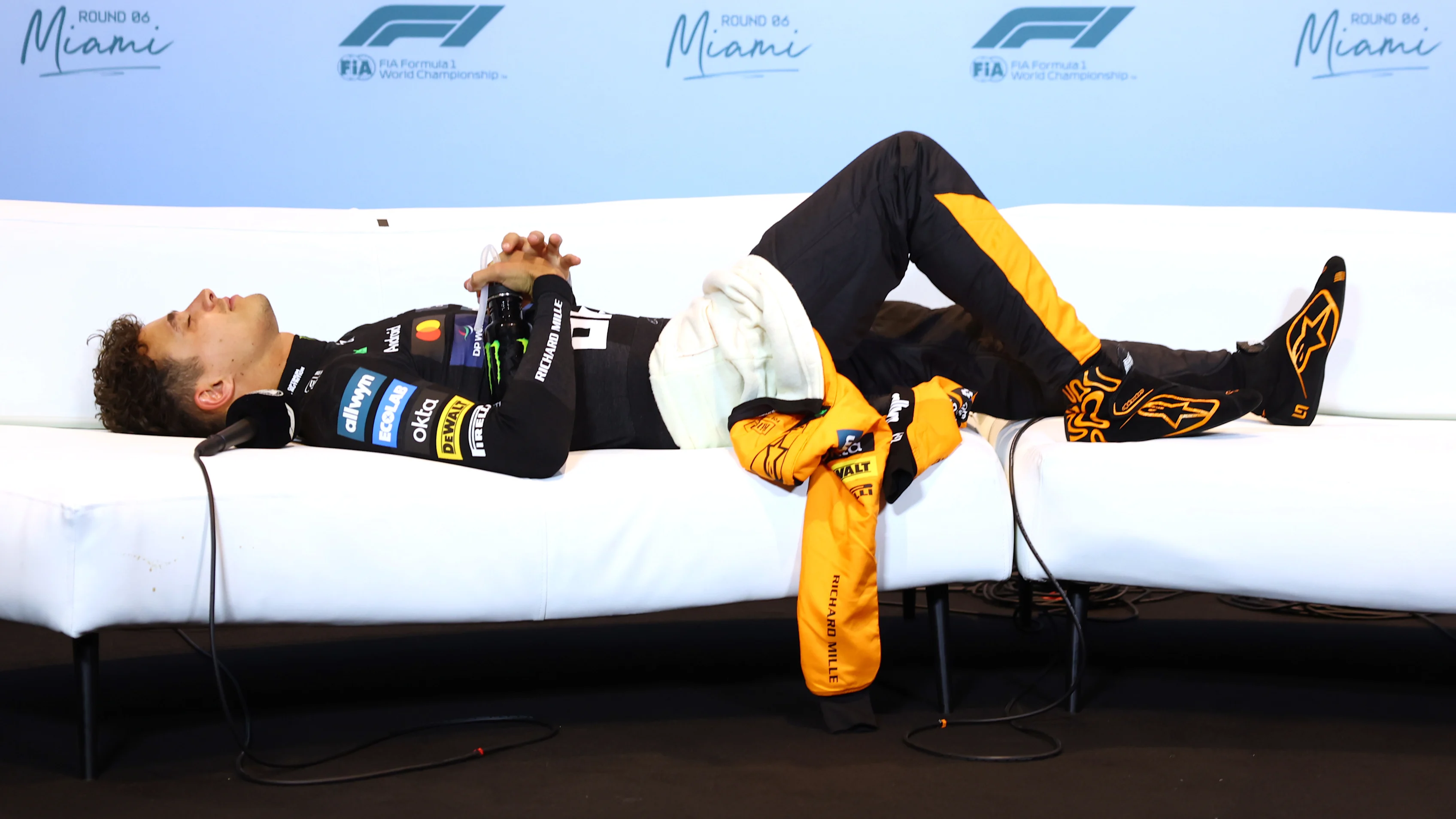
For the drivers, soon after the race concludes they must already be thinking about their recovery plan and the week of training ahead. This is even the case when there is no racing on the schedule – after Norris completes his fitness assessment day, he's completely spent. "I don't feel great, I'm pretty dead," he admits to camera. But there's a long car journey back to McLaren ahead of him, and he needs to "get rested up and get ready to go again." That's the reality for the drivers – even periods of rest are strategic!
Sleep hygiene is just as important as training sessions as rest is where the adaptations from hard workouts are made. Casanovas talks to hotels in advance to ensure Russell's room is set up correctly. Russell brings his own pillow and duvet, and there are sleep supplements waiting in his room. "Little things like this: reminding him to sleep, reminding him to take naps," says Casanovas. The key to a successful relationship between the performance coach and the athlete is understanding every detail of their schedule – even when they’re having a snooze!
Could you train like an F1 driver?
During the off-season, drivers like Valtteri Bottas and Daniel Ricciardo would train six days a week. Ahead of the 2020 season, Daniel Ricciardo's kettlebell routine was shared on social media, and consisted of:
- Reverse lunge press – 10 reps
- Front squats – 10 reps
- Kettlebell swings – 10 reps
- Thrusters – 10 reps
- Sumo deadlift – 10 reps
- Military press – 10 reps
- 2-minute rest
Repeat five (!!) times
Don’t be fooled – even though drivers are mostly sitting in cars, it’s crucial for them to strengthen and train their entire bodies. Squats for glute strength and stability, and deadlifts for the hamstrings and quads that need to be strong enough to apply 160kg braking force up to 1,200 times per race! Even with power steering, driving at those speeds with that much g-force requires their arms need to be incredibly strong.
Pull-ups, press-ups, and bench presses, all designed to support those highly developed neck muscles and maintain control while being subjected to g-force. One exercise you might recognise from drivers’ social media is to improve their core strength: sitting on the floor holding a racing position, rotating a weighted disk clockwise and counterclockwise to mimic steering – although it might look a little odd, it is effective!
With such an intensive exercise schedule fitted around copious amounts of travel and hectic race weekends – maybe we’ll leave it to the professionals!
Next Up

.webp)
.webp)
.webp)
.webp)