Driving Tomorrow by Santander: James Vowles on the 2026 regulations, embracing new technologies and F1’s future
As part of Santander’s Driving Tomorrow series, Williams Team Principal James Vowles gives his take on F1 as it is today and where the sport might be heading…

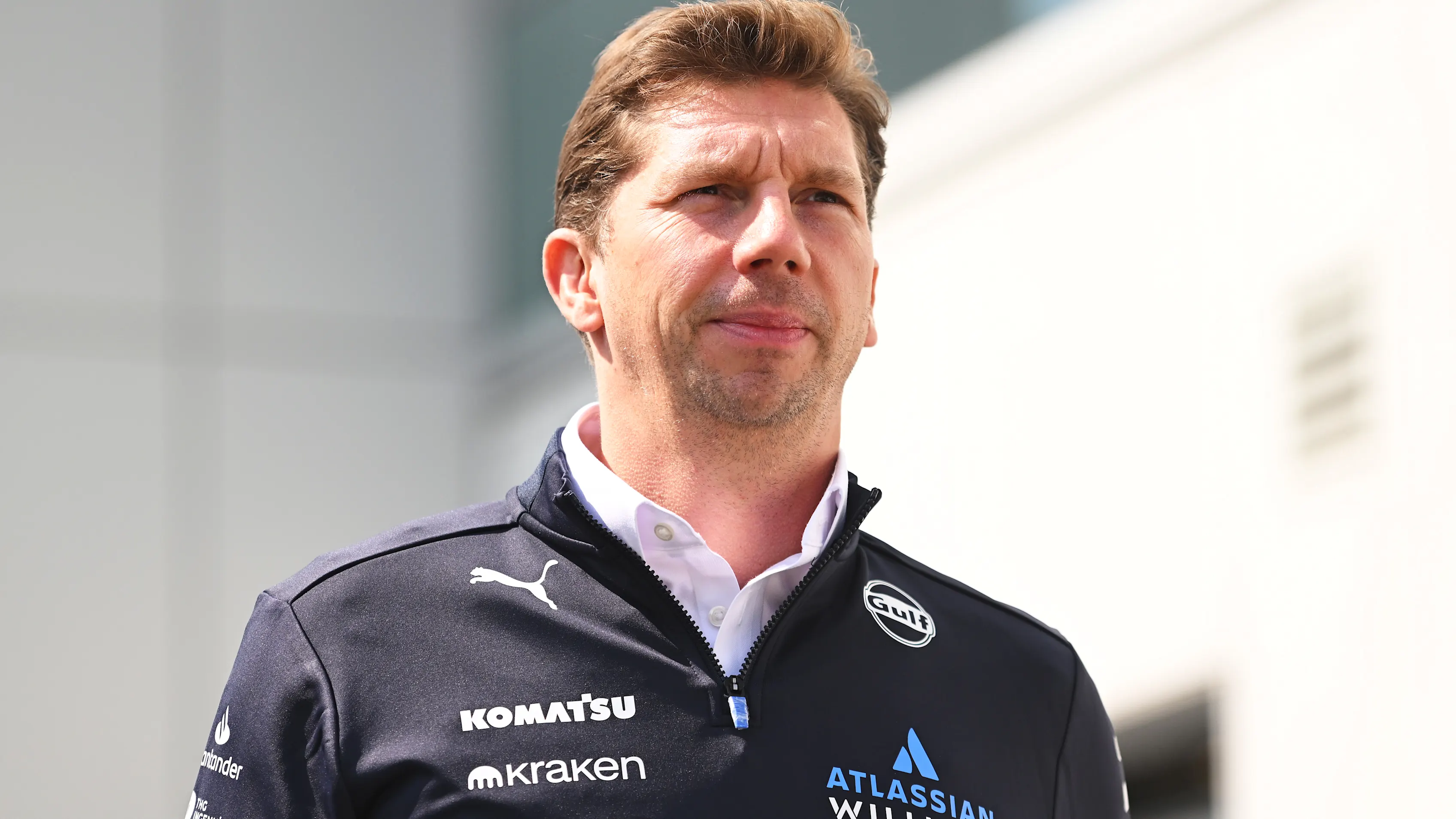
Still only in his mid-40s, James Vowles has already experienced a lot in F1, going from a budding engineer to an influential strategist and now a respected team boss. As part of Santander’s Driving Tomorrow series, he discusses the challenge ahead with the 2026 technical regulations, explains how the sport is developing on and off the track, and previews what might be to come over the next few years…
Vowles is one of the most impressive characters in the F1 paddock – the Briton, who spent part of his youth and education in Switzerland, seemingly having a well thought out, balanced answer to any question thrown his way from weekend to weekend.
His F1 journey started with BAR back in 2001, fresh from university and a master’s degree in Motorsport Engineering and Management, and he grew with the Brackley squad through the Honda, Brawn GP and Mercedes iterations that followed.
Vowles made a mark during those Brawn GP and Mercedes days in particular, when he worked with the likes of Jenson Button, Michael Schumacher, Nico Rosberg and Lewis Hamilton, and his race strategies contributed to a host of victories and world titles.
Mercedes boss Toto Wolff knew he had a particularly smart mind in his ranks and, as the 2010s ticked by, Vowles was steadily given more and more managerial responsibility, as well as continuing to lead the Silver Arrows’ strategy department.
Then, on the eve of the 2023 season, Vowles received an offer he could not refuse – the chance to lead the storied Williams squad, who last won a World Championship in the late 1990s and are working hard to write a new chapter of success.
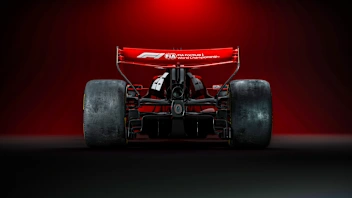
Today, Vowles and his fellow team bosses are facing one of the biggest challenges in their F1 careers to date as they prepare for an all-new era of regulations that will come into play in 2026, including revised aerodynamics, new power units that feature increased battery power, and the use of advanced sustainable fuels.
So, how is he feeling about the campaign ahead, and the painstaking work that has gone into it?
“The first thing to note is, certainly in the years that I’ve been in the sport, this is the largest rule change,” says Vowles. “We’re changing not just the power unit, but the chassis regulations as well. There’s nothing that’s carryover – not even a bolt is carryover!
“It’s a huge, huge change for these organisations, for us, and the work on this started all the way back in 2024. It was the first point at which it was very clear that the rules were changing, but there wasn’t a lot of detail wrapped around it.
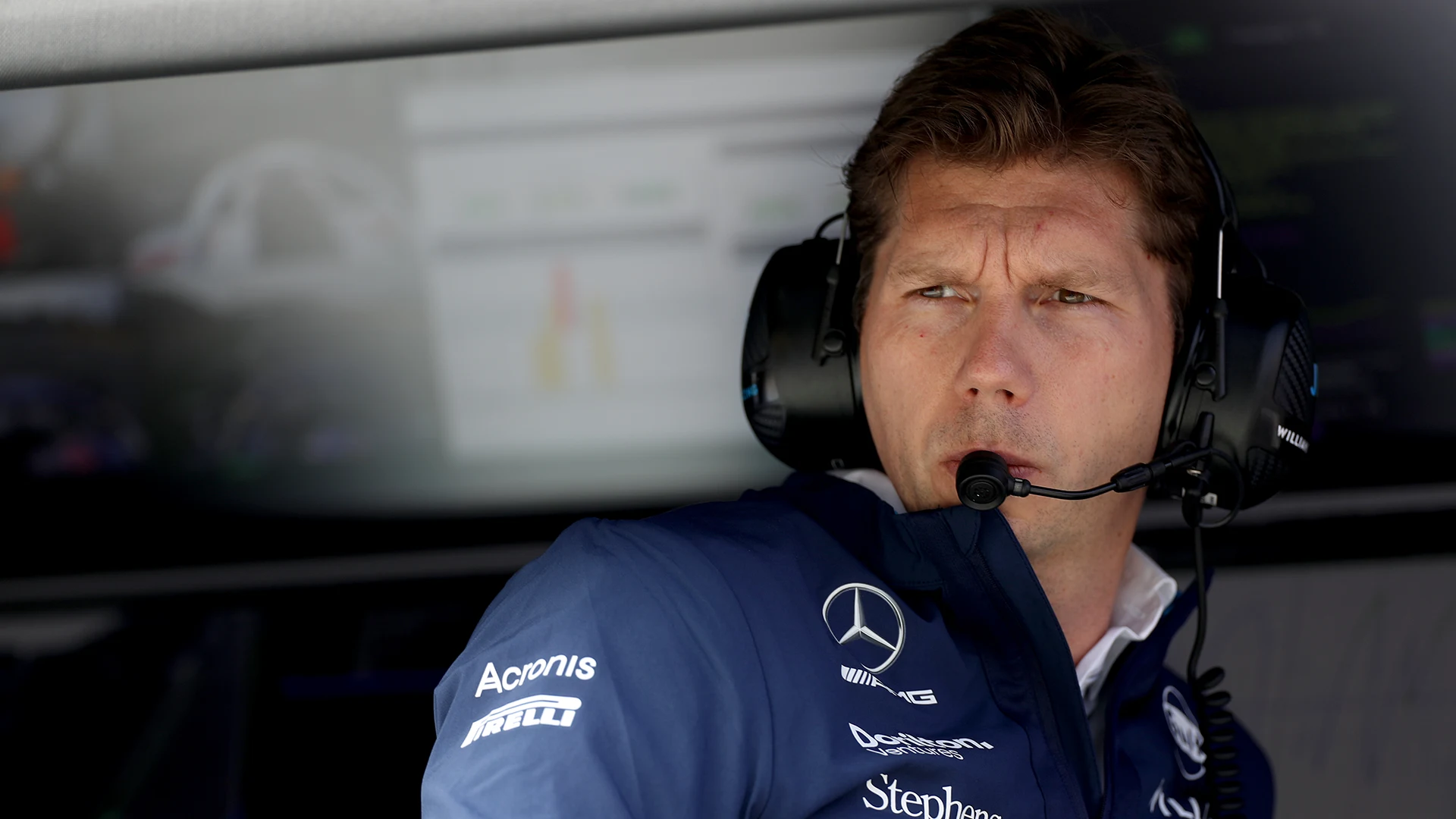
“The power unit side was a lot more developed than the chassis side, and that was the point at which we started to work hand in hand with Mercedes, the power unit manufacturer we signed the agreement with [for the new regulations].
“On the chassis side, again, really around the beginning of 2024, the middle of 2024, is when we spent quite a bit of time working on the 2026 regulations, and that’s obviously before this year’s car had even turned a kilometre. That’s how you have to do it in the modern era, really, to make sure you get ahead of the curve.”
Assessing how these new rules tie into road relevancy, with plenty of big-name manufacturers committed to F1 for the foreseeable future, Vowles continues: “I think one of the largest changes that we have to acknowledge is that we’ll be going to sustainable fuel. That is a huge, huge change, and not just for F1. It will be a change, in my opinion, for the world over the next 10 to 20 years.
“No one really knows what the right direction of travel is for road cars. Hydrogen is still out there, electric vehicles are still out there, and certainly for the next 10 years combustion engines will be out there. Synthetic fuel is one way of making sure that we’re effectively continuing that pathway and buying ourselves time more than anything else.
“Williams was very much a spearheading force for this [road relevance]. If you think of ABS (anti-lock braking), traction control, active suspension, active aerodynamics, those are all aspects, and a lot of them were developed within Williams or put into a Williams car back in the 1980s and 1990s.
“These technologies are pretty much on every road car today, so I like the fact that we’re this pioneering base, I like the fact that synthetic fuel could be the next element that completely changes the world, and that we’ll be at the forefront of it.”
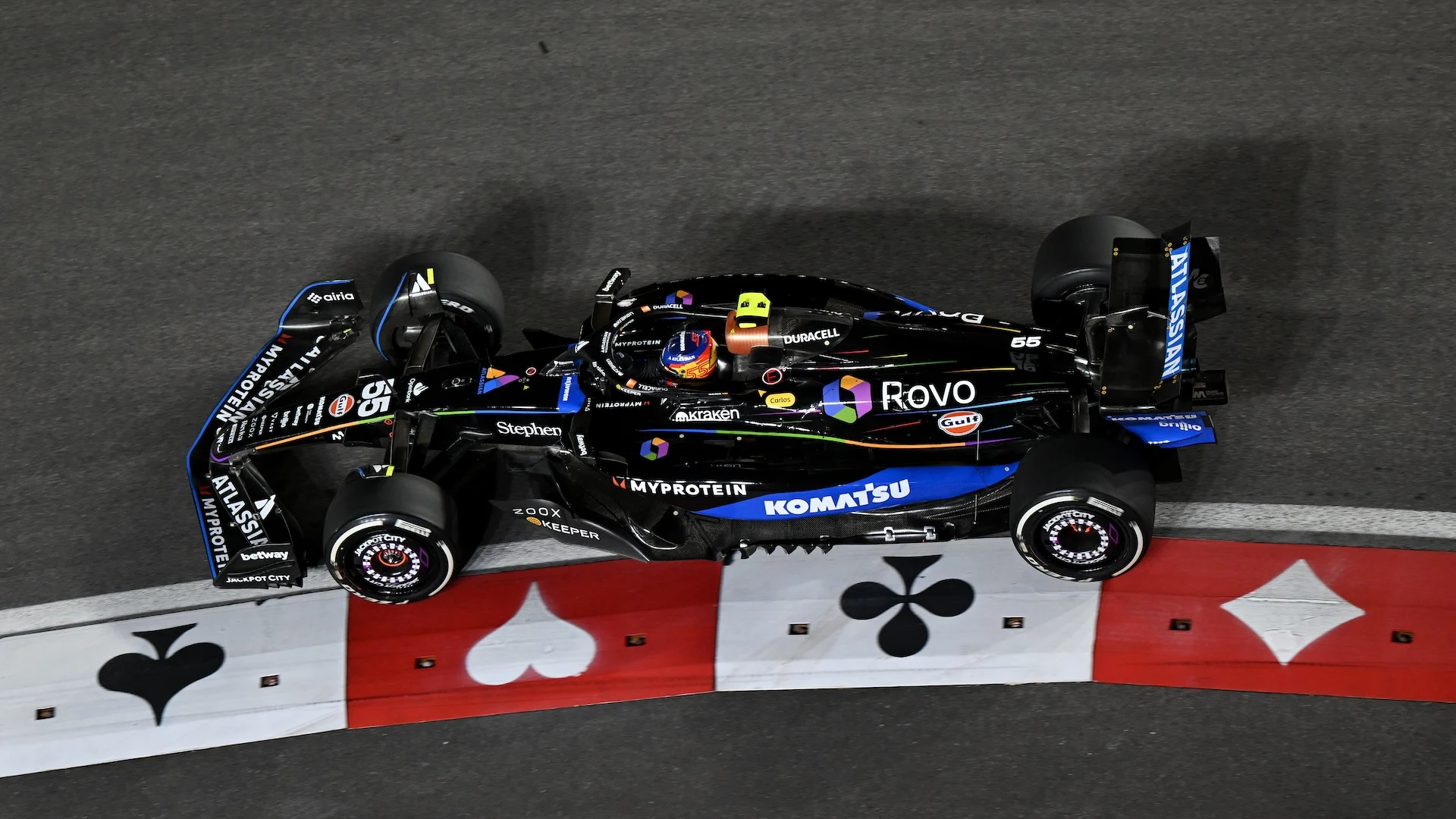
Staying ahead of the curve that Vowles mentioned is easier said than done, but Williams – who recently ran a special livery to celebrate title partner Atlassian and their Artificial Intelligence-powered solution Rovo – are always looking at ways to innovate and support that journey.
“F1 isn’t the most advanced in a huge number of areas, and I’ve said this publicly, but AI is one of them,” he comments. “The outside world is ahead of where we are, and there’s inspiration we can take from that.
“Take materials. There are always interesting ways of using carbon fibre materials, other metallic materials, or even ways of printing. But again, it’s really interesting to see what the outside world is doing and to understand where we are today.
“This is one of the reasons why I love it. F1 is absolutely the pinnacle of technology, but at the same time, a little bit artisan. If you were to walk around our facility, you’ll see a lot of human beings pushing carbon fibre into moulds, and that’s the parts. Most of the parts you see on the car, 85% are carbon fibre.
“What I like is this mixture between this sort of artisanal hand method of doing things and the real modern way of, for example, metallics. It’s about 3D printing more and more, but it’s not as light a component. So, what we’re interested in is what technologies are being developed in that area, and where will we be in the next three to five years?
“The way that we conceptualise a car, the way we go about the understanding of what it will look like in the future, will change in the next five years – I have no doubt about it. It’s changing now. I think there’s a good pathway for us, and it’s always trying to think about new ways of doing things.”
That said, the F1 cost cap – introduced in 2021 – means teams up and down the grid have to think very carefully about how they spend their money, rewarding efficiency rather than the free-for-all spend seen in years gone by.
For Vowles and many other key players in the paddock, this is an integral factor behind F1’s increased competitiveness and popularity over the last few seasons, with 2024 and 2025 bringing two of the closest campaigns on record.
“It becomes a compromise,” says Vowles of the cost cap’s impact. “You either choose to do more, and it could be even just more upgrades in a year, or more investment in your future, but the simple matter of fact is we’re all constrained by the same pot of money.
“I think this is one of the best things we’ve done as a sport, because prior to this, you would simply write a cheque, spend more money and it wouldn’t be efficient. What we’re really having to do now is properly adjudicate which one of the two [options] is the right solution, both for today and perhaps for the next two to three years.
“They’re not always the same thing, and I like that compromise. It means that it gives teams like ourselves an opportunity to do something different, and to see if it pays off.”
With a brilliant rise to fifth in the 2025 Teams’ Championship underlining that point, 2026 will present another level of opportunity for Williams to climb even further up the grid, and Vowles – taking into account the past, present and future discussed above – offered one more nugget of insight for fans on what lies ahead.
Referencing an ultra-close Sprint Qualifying session at the recent Qatar Grand Prix, he smiled: “I think every time I added 10 milliseconds, we had a place [on the grid]. I think we could have been P4 with under a tenth of performance [gained], which is extraordinary, and it’s just a brilliant state for the sport to be in.
“I think because the rule change is so enormous next year, it will expand the grid out a little bit – but there’s a ‘but’. Now what you have is 10 and next year 11 teams that are very good at developing, and that’s why you have a close grid. So, even though it expands, I think you’ll see it compress pretty quickly, and quicker than it ever has before.”
Next Up
Related Articles
 ExplainedAll you need to know about Advanced Sustainable Fuels
 From camouflage to hearts – 8 of the best testing liveries
.webp) What happened on Day 3 of the Barcelona Shakedown?
What happened on Day 3 of the Barcelona Shakedown?.webp) The best social media from Day 1 in Barcelona
The best social media from Day 1 in Barcelona Hamilton buoyed by ‘really productive’ start in Barcelona
.webp) Quiz10 quiz questions on the latest F1 news
Quiz10 quiz questions on the latest F1 news